Category: Crossed & Found

All things cross stitch! Think current projects, pattern recs, must-have tools, and the apps that help me stay organized and inspired.

  • 2026 Temperature Cross Stitch: April

    2026 Temperature Cross Stitch: April

    I’ve now finished stitching four months of this project, and I think it’s finally time to admit something: I kind of hate it.

    Scratch that. Not “kind of.” I actively detest it at this point.

    Not the finished product, necessarily. I still think the completed garden will be beautiful someday. But the actual experience of stitching it? That’s another story.

    I hate the fabric. It’s loose and slippery, and I swear I can feel it stretching as I stitch. More than once, I’ve used a hole that wasn’t really a hole and had to frog my work before starting over.

    I hate how many colors are involved because I’m constantly switching threads. What do you mean I’m using up to FOUR different colors per day?

    I hate how dense each day feels. Instead of being relaxing, stitching often feels like a chore I’m trying to power through before bed.

    And honestly? I hate that I let myself fall so far behind, because now every stitching session feels less like creativity and more like trying to pay off a debt.

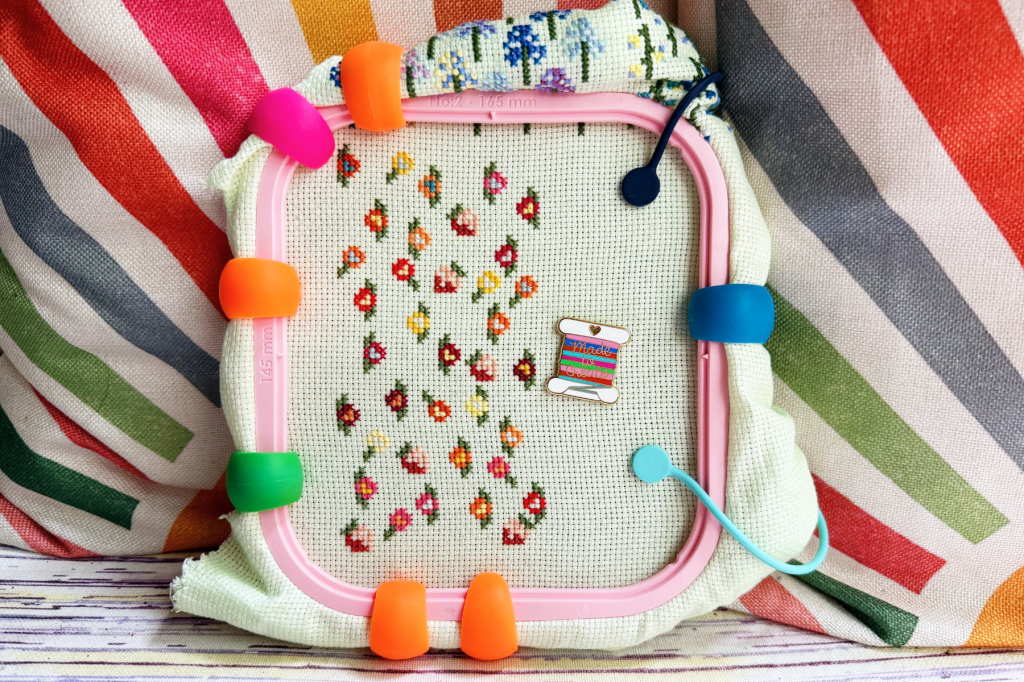
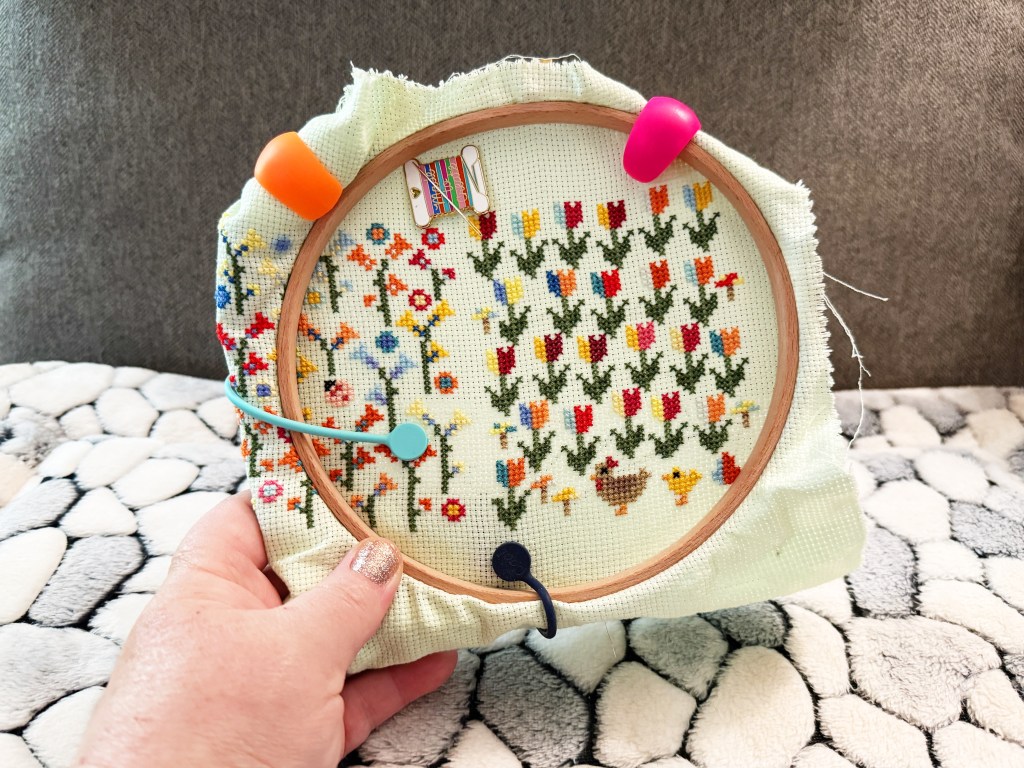
    April’s temperatures ranged from 30.9º to 95.2º, with a 48.4º swing on April 10 alone. (I’m sure that was some crazy weather day, but unfortunately it’s so long ago that I have no recollection.) Which, honestly, feels fitting for a project that increasingly seems determined to keep me emotionally unstable through the medium of embroidery floss.

    I kept waiting for this project to click the way last year’s cat temperature project did. I thought eventually I’d settle into a rhythm and finally start loving it.

    Four months in, I’m starting to worry that moment may never come.

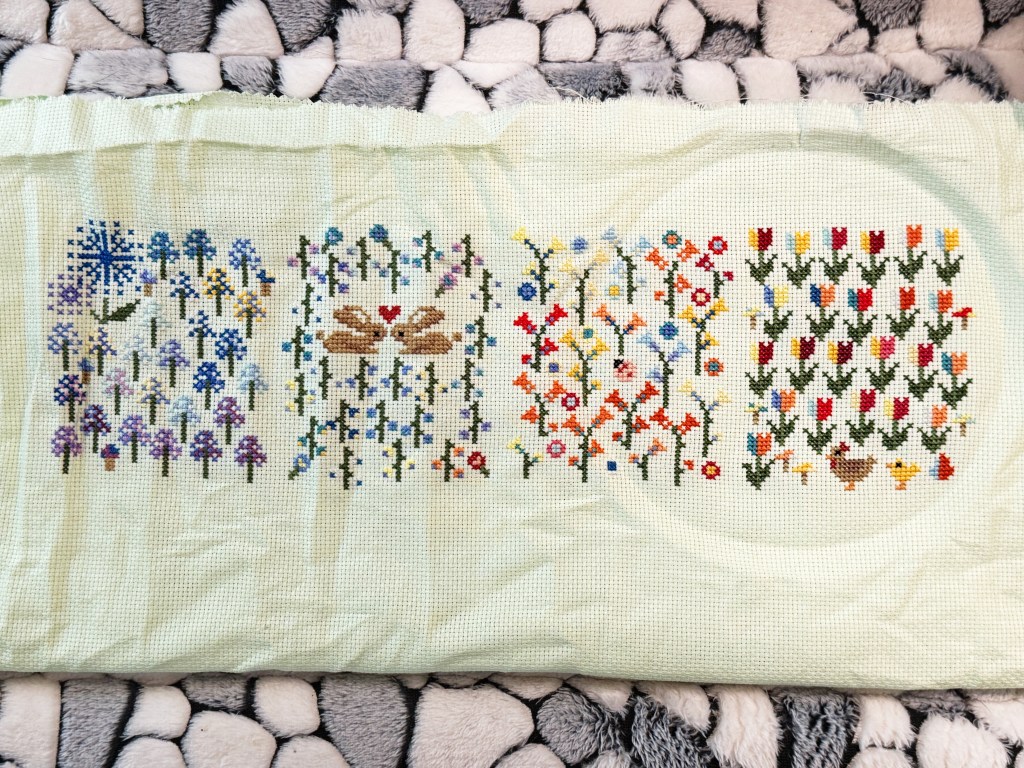
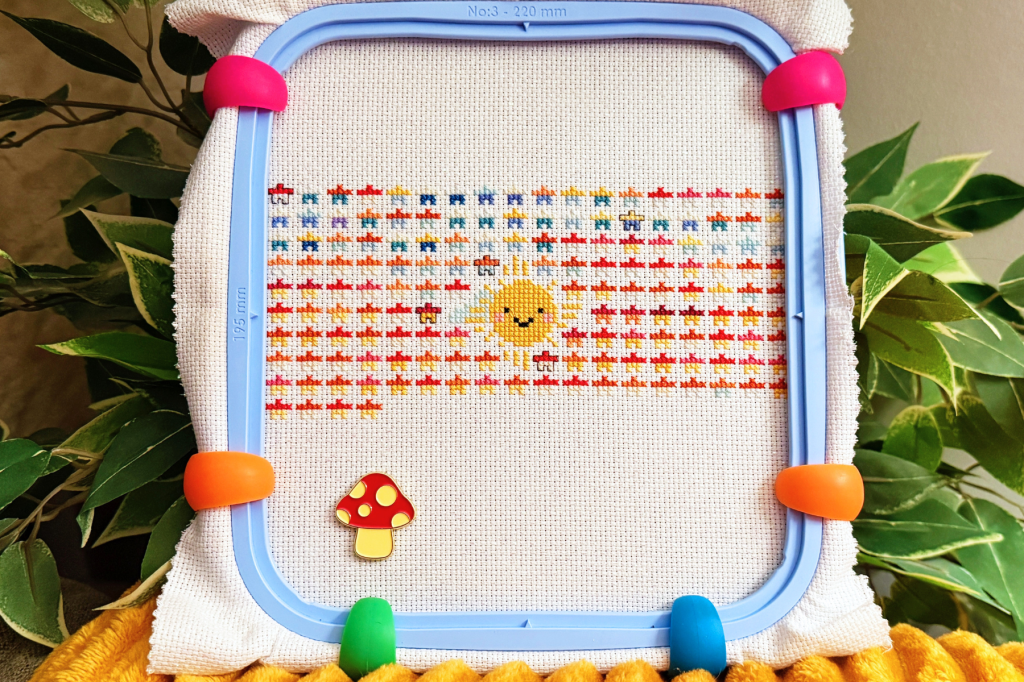
    Here’s a look at four months of stitching progress. Or, depending on your perspective, four months of frustration preserved in embroidery floss.

    You’ll notice I didn’t even bother ironing it before taking photos. That should tell you everything you need to know about where I’m at emotionally with this project right now.

    But getting there has felt exhausting.

    I think part of the problem is that this project demands constant attention. Last year’s project felt simple and meditative. This one feels fussy. Every section requires counting, thread changes, or double-checking charts and spreadsheets. Instead of helping me unwind, it sometimes leaves me more mentally tired than when I started.

    And yet… I’m still stitching it.

    Partly because I’ve already invested so much time into rebuilding charts and organizing spreadsheets around it. Partly because I genuinely want to see the finished garden come to life.

    And partly because, according to Markup R-XP, I’ve already stitched 3,977 stitches this year. At this point, sheer stubbornness may be carrying the project more than inspiration.

    But mostly because I think this project might be teaching me something important about the difference between loving an idea and loving the process.

  • 2026 Temperature Cross Stitch: March

    2026 Temperature Cross Stitch: March

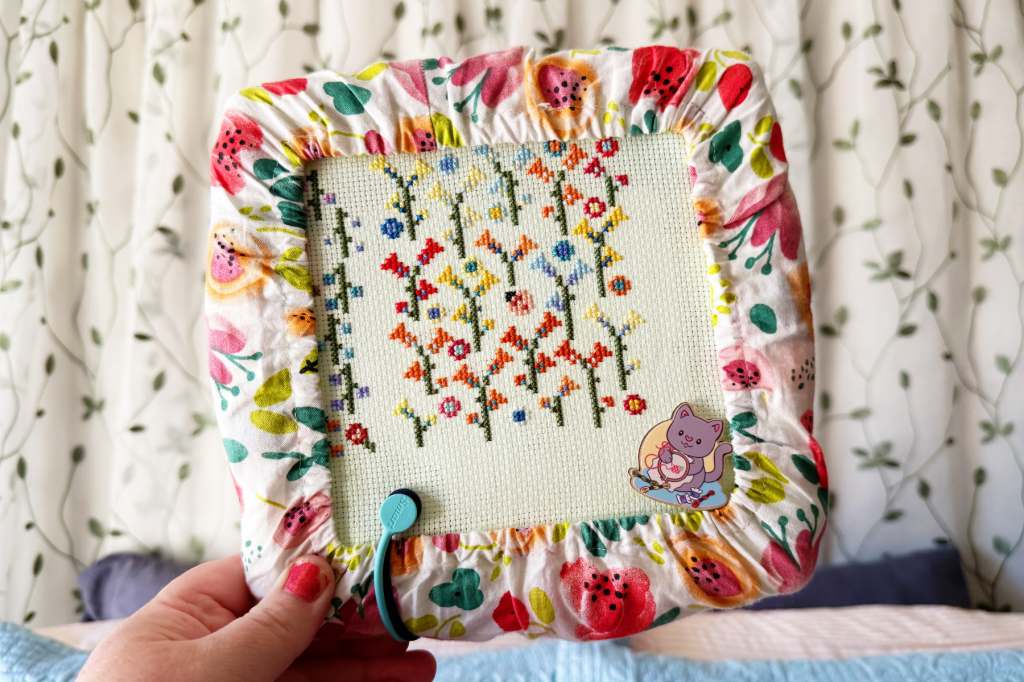
    I’m (more than) a little overdue on this one, but March’s garden is finally finished and ready to share.

    March’s temperatures ranged from 25.2º to 91.4º in Burke. Yes, you read that right. March. The biggest swing came on March 12, with a 46.8º shift in a single day. And honestly, that tracks.

    It was 90º on March 11 and still warm when I left for the office the next morning. By midmorning, we had torrential downpours, strong winds, and occasional hail. Shortly after noon, it started snowing. A few hours later, every bit of snow that had stuck to the trees, grass, and cars was gone. It was one of the wildest 24-hour stretches of weather I’ve ever experienced.

    Visually, that chaos shows up in the stitching. There’s far more orange and red than I ever expected to see in March, especially with a good amount of purple and blue still mixed in. It’s a strange palette for early spring, but also a very accurate reflection of the month.

    This month’s flowers tested me in just about every way possible. It’s a good thing no one except me knows exactly how the pattern is supposed to look, because I definitely took a few liberties along the way. Let’s call them “creative adjustments.”

    That said, I do love the little ladybug and the wide range of colors that came out of it. Even when it felt chaotic, it still came together into something I enjoy looking at.

    And I am very much looking forward to April, which promises a far more straightforward pattern and an abundance of tulips.

    My biggest lesson this month was simple. No matter how frustrated I get, I need to try very hard not to fall behind. Once I do, catching up becomes a truly herculean task.

  • 2026 Temperature Cross Stitch: February

    2026 Temperature Cross Stitch: February

    February kept things interesting. The weather was completely unpredictable. Great for creating color variety in a temperature project. Not so great for planning (anything) or commuting.

    The high reached 68.4º, while the low dipped to 11.7º, giving the garden another wide spread of color to work with. The biggest temperature swing happened on February 14, when we jumped from 21º to 59.7º. A 38.7º swing in a single day feels dramatic, even for February.

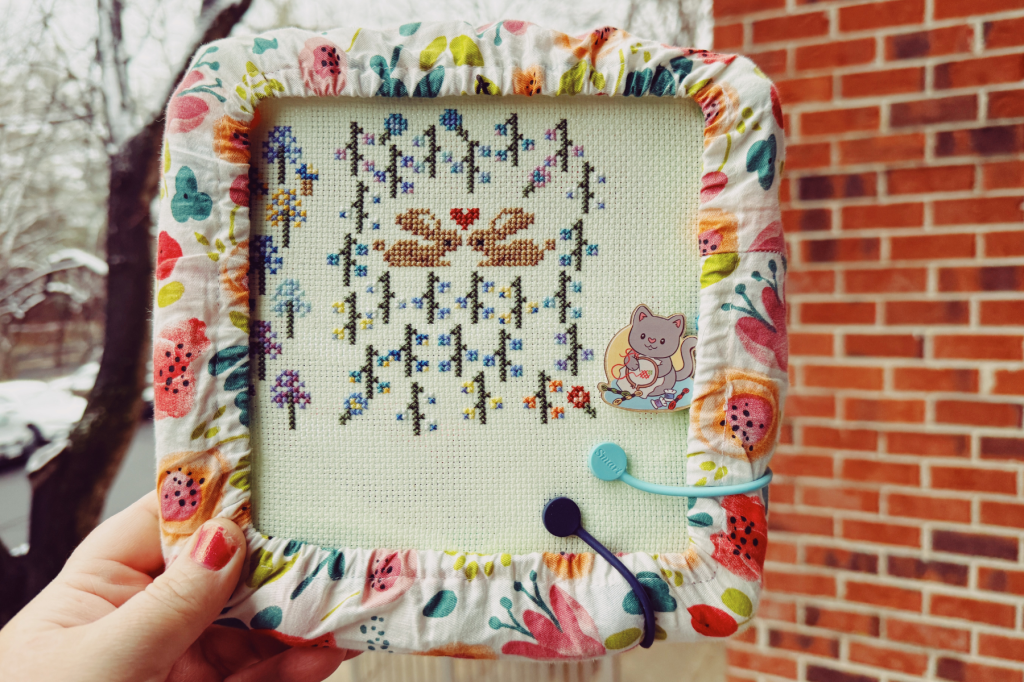
    February didn’t just bring new temperatures. It introduced two new types of flowers to the garden, along with an array of fresh colors that brightened the whole scene. And a pair of very cute bunnies for an added touch of whimsy.

    You might recall I mentioned in my January launch post that I suspected I would learn additional lessons along the way. I was right.

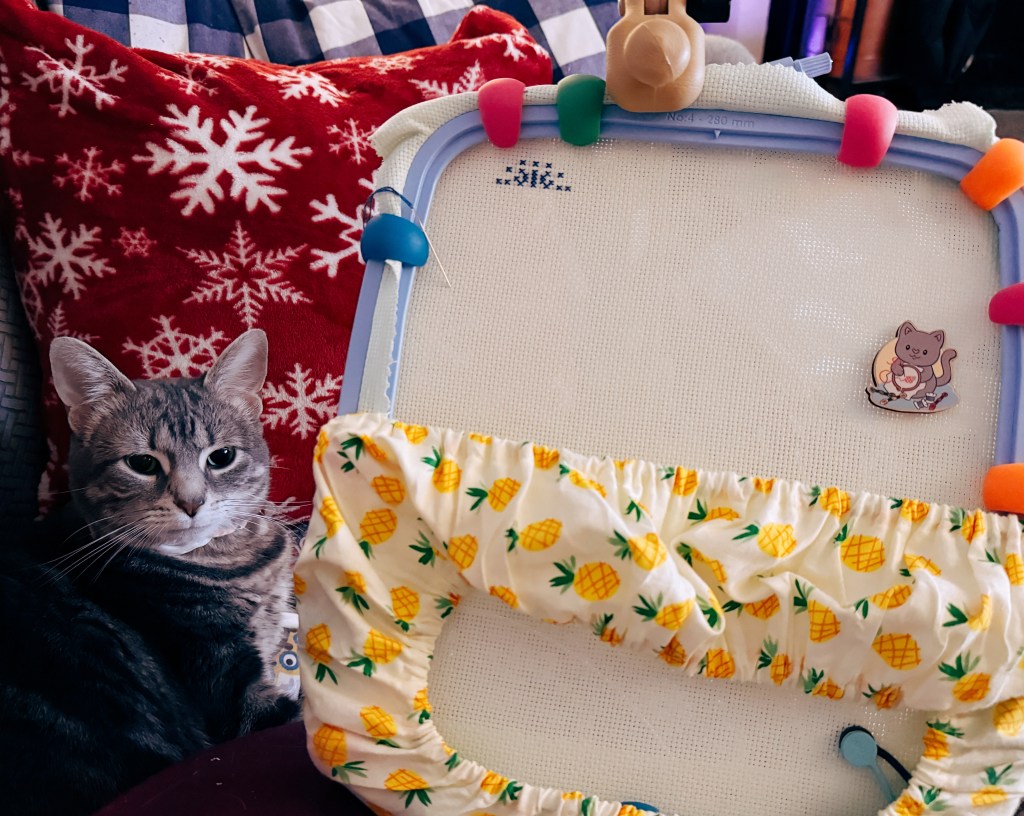
    I started the year using a large hoop so I could see more of the project at once. In theory, it felt efficient. In reality, it was unwieldy and mildly infuriating. I was fighting the hoop as much as I was stitching the pattern.

    Before I began February, I downsized to a smaller hoop. What a difference it has made. Instead of wrestling with the hoop and dreading the process, I feel more focused and far less overwhelmed. My stitching has improved, and so has my attitude. Significantly.

    It turns out I work better on smaller surfaces. Large, unwieldy hoops and I simply do not get along.

    Another lesson learned. Another small adjustment that makes this project so much more enjoyable.

  • 2026 Temperature Project: A Cozy Garden (and a Chaotic January Catch-Up)

    2026 Temperature Project: A Cozy Garden (and a Chaotic January Catch-Up)

    This year, we’ve officially left the cats behind. Well, the cross stitched ones, anyway. Muffin still insists on being involved, or at the very least adjacent to, all of my projects. She may not be the focus of this one, but she is absolutely part of the process.

    For 2026, I’m stitching a cozy garden — complete with a charming cottage and a few adorable critters — with tiny patches of flowers and plants that change with the months. Each day adds to the landscape. Each temperature shifts the colors. By December, the whole little world should feel alive.

    And honestly? It almost didn’t happen.

    The Struggle to Start

    I knew this project was ambitious. It’s large. It’s detailed. It’s whimsical. It’s exactly what I wanted for the year. Never mind that I bought two other patterns before finally landing on this one. Indecision is apparently also the theme of 2026.

    What I didn’t fully account for, though, was how much front-end work this would require.

    The pattern itself is lovely. Truly. But for my brain? It wasn’t quite detailed enough in the places where I needed clarity. Which plant goes with which day? What do you mean I can just decide whether the squares marked 1 or 2 represent the high or the low temperature? I need more structure than that. Instead of diving in, I stalled.

    Eventually, I did what I always do when a pattern doesn’t work exactly the way I want it to: I rebuilt it. I recreated the entire thing in MacStitch so I could see it the way my brain needed to see it. I mapped out each plant. I clarified the layout. And because I clearly enjoy making things harder for myself, I also created cheat sheet PDFs for every single month so I know exactly which flower or plant gets stitched each day.

    And then, because apparently we were committing fully to the bit, I built a Google Sheet. Now I enter the daily high and low temperatures, and it tells me exactly which DMC thread colors to use. No second-guessing. No flipping back and forth between charts. Just tidy, color-coded certainty.

    Last year’s temperature project was fully analog. Paper charts. Manual tracking. Vibes. This year? I have spreadsheets.

    Was all of this necessary? Debatable. Did it give me peace? Absolutely.

    There’s something about a temperature project that feels deceptively simple. “Just stitch the daily color.” Except this one isn’t just color blocks. It’s landscaping. It’s garden planning. It’s high and low temperatures layered into petals and plants. It’s an entire ecosystem supported, apparently, by a small but mighty data management system.

    I may have slightly bitten off more than I could chew at the start. Once the foundation was set, I was excited to stitch. Then I spent half of January racing to catch up, which almost undid all that excitement.

    January Update

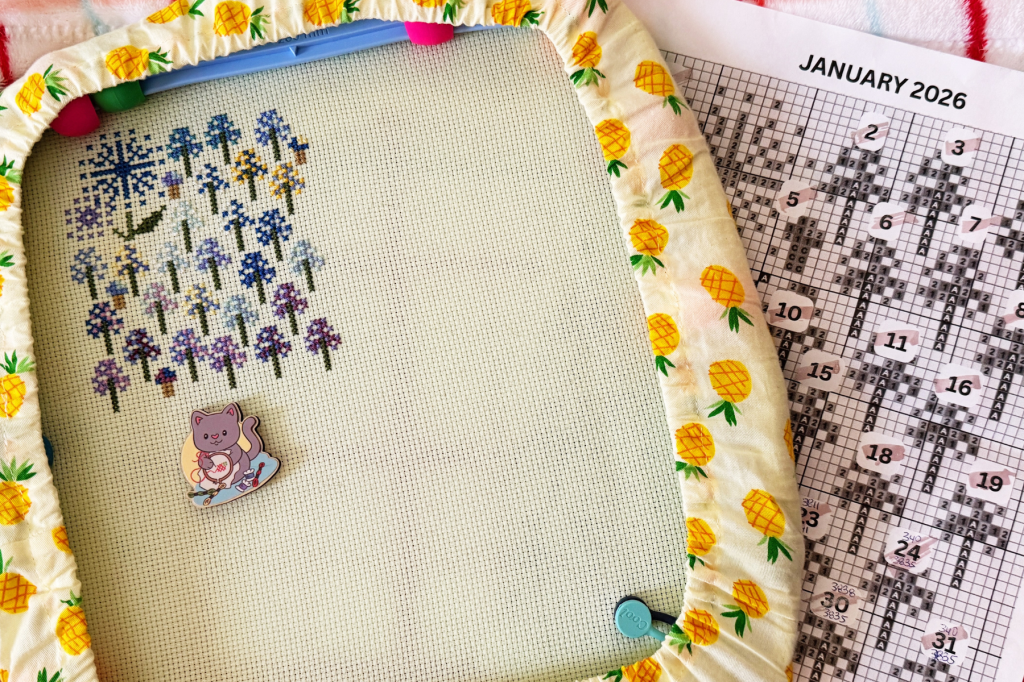
    January’s temperatures in Burke ranged from 7.3º to 64.6º. Quite the range, right? The biggest single-day swing happened on January 21, when we jumped from 13.3º to 45.7º.

    That made for a surprisingly dynamic color spread right out of the gate. Most of the palette stayed in cool purples and blues, but those warmer days added little pops of yellow that brighten the garden in unexpected ways.

    Because I’m tracking both highs and lows this year, each day brings double the data and double the stitching. Most days leaned icy and muted. Others surprised me with small hints of warmth that feel like early whispers of spring.

    Sticking With It

    I know this project is going to be beautiful when it’s finished. I adore the palette. I love the cozy, whimsical vibe. I can already picture it framed and hanging somewhere it can catch the light.

    But this year is teaching me something different than the cat project did. This one isn’t just about showing up daily. It’s about building structure first. It’s about problem-solving. It’s about giving myself permission to adjust the pattern so it works for me.

    And maybe that’s the real January lesson.

    I have a feeling there will be other lessons along the way, too. This project is big enough and detailed enough that I’m sure it will challenge me again. When it does, I’ll share that part, too.

    We’re caught up. The cheat sheets are printed. The MacStitch file is organized. The Google Sheet is doing the heavy lifting. The garden has officially begun.

    Now we just have to keep it growing. 🌿

  • 2025 Temperature Cross Stitch: December

    2025 Temperature Cross Stitch: December

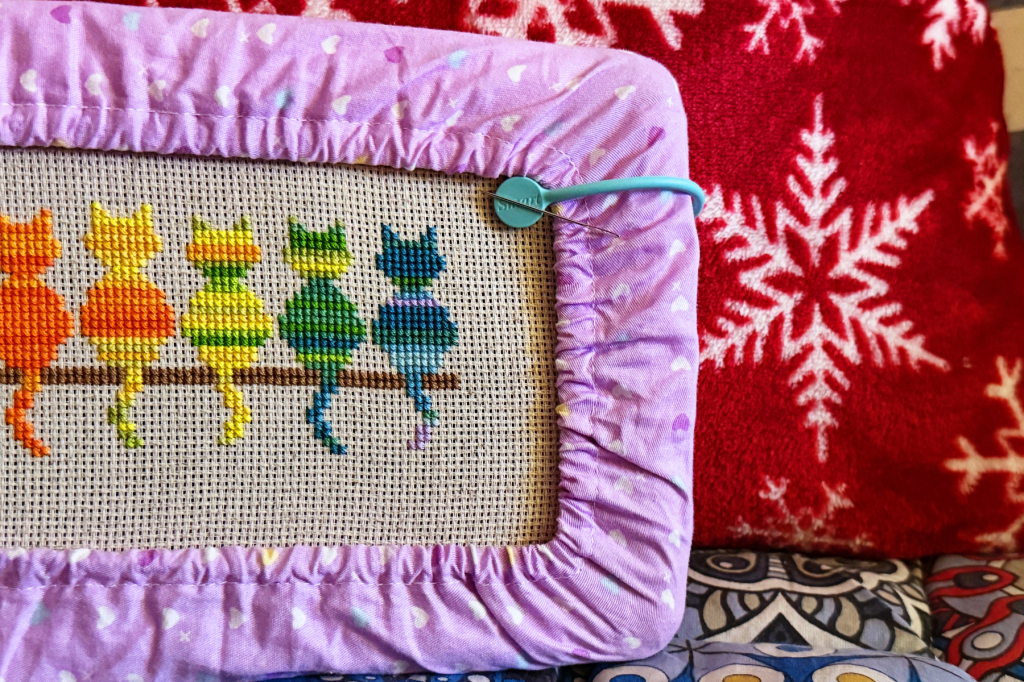
    And just like that, my 2025 temperature cross stitch project is complete. What started as a “sure, why not?” idea at the very beginning of my cross stitch journey turned into one of my favorite creative projects of the year. Over the course of 365 days, 2,250 stitches, 30 colors, and 12 little cats, I stitched the average daily temperature in Burke, VA for all of 2025. Seeing the entire year come together at the end feels incredibly satisfying. Just look at these colorful little cats!

    Looking back, there are a few big lessons I’m taking with me from this project.

    First, fabric really matters. I chose a Fiddler’s Cloth from Michael’s because I wanted to avoid white fabric, knowing this piece would be handled daily for an entire year. Unfortunately, that choice did not age well. The Loops & Threads brand was rough, inconsistent, and honestly kind of trash. Do not recommend.

    Second, my stitching improved so much over the course of the year. When I started this project, I had been cross stitching for less than a month. Watching my tension improve, my stitches get cleaner, and my confidence grow as I learned better ways to start and finish threads was one of the most rewarding parts of the process. You can literally see that progress stitched into the piece, especially when you look at the first cat next to the last.

    Another big takeaway is how important it is to keep up with a project like this regularly. When life got chaotic toward the end of the year, this project slipped to the back burner, and I ended up stitching almost all of December at the same time. It turns out this is far more fun when you’re doing a little bit each day, or at least every couple of days. The daily rhythm is part of what makes a temperature project special, and I definitely felt the difference when that routine disappeared.

    I’m so glad I decided to use a Q-Snap frame for this project. Being able to mix and match pieces to fit the slightly odd fabric size meant I could see almost the entire piece at once, which made a huge difference over the course of the year. Pairing it with a grime guard also helped keep the fabric clean through months of regular handling.

    I also loved how simple and analog this year’s pattern was. Tracking temperatures with pen and paper felt refreshing in a world where everything is digital. There was something deeply satisfying about writing down the daily average temperature and physically marking my progress as I went.

    That said, I’m already switching things up for next year. The 2026 pattern is more complicated, and I’ll be tracking everything digitally this time. It feels like the right evolution after finishing a project of this scale. More on that very soon.

    This temperature cross stitch will always be special to me. It represents an entire year of learning, patience, and showing up creatively, one tiny stitch at a time. Now I need to decide how I want to frame or mount it and give it a spot on my wall.

  • 2025 Temperature Cross Stitch: November

    2025 Temperature Cross Stitch: November

    I fully intended to get this posted weeks ago, but December was one of those months where everything piled up at once. Instead of stressing about being behind, I’m just going to celebrate the fact that this sweet little kitty is finally getting its moment.

    In Burke, the average high temperature in November was 58.7ºF and the average low was 34.6ºF. The cooler weather meant a return to the most beautiful palette. These colors are officially my favorites of the entire year of cats. Purples, teals, and even some light blues appeared this month, and the whole combination made November such a joy to stitch.

    Eleven cats finished now, and I cannot believe there is only one left to add. December, you are up next.

  • 2025 Temperature Cross Stitch: October

    2025 Temperature Cross Stitch: October

    I know, I know… this update is well overdue. Life has been a little crazy lately, but better late than never, right? And honestly, I couldn’t skip posting about October since it’s my favorite month of the year! Between the cooler weather, cozy vibes, and changing colors, it’s always such a reset moment, and that definitely came through in this month’s stitching.

    October brought a definite change in my temperature cross stitch palette. After several warm, orange and yellow months, it felt refreshing to return to cooler tones. Most of this month’s stitches were soft greens and teals, reflecting temperatures that were significantly cooler than I expected for this time of year. That’s on tracking average temps instead of high temps.

    In Burke, the average daily temperatures ranged from 47.8ºF to 72.1ºF. The milder days and crisp evenings made for a calm and cozy month of stitching, and I love how those cooler shades stand out beside the warmer summer colors.

    Ten cats down and only two left for the year! I can hardly believe how close this project is to being complete. Here’s hoping November brings even more of those pretty teal tones before winter really sets in.

  • 2025 Temperature Cross Stitch: September

    2025 Temperature Cross Stitch: September

    If you caught my August update, you probably remember getting a little sneak peek of September’s cat. Now here’s the full reveal—and it was worth the wait! This month’s kitty brought a more subtle shift in color as we eased out of the peak summer heat.

    The average daily temperatures in Burke ranged from 62.4ºF to 76.6ºF, so we had limited oranges and no blazing reds this time. It felt like a calm, steady transition into early fall, and I really love how that shows in the stitches.

    Nine cats stitched and only three left to go for the year! It’s amazing to see how much of the piece is filled in now, and I can’t wait to watch the final months come together.

  • 2025 Temperature Cross Stitch: August

    2025 Temperature Cross Stitch: August

    Okay, yes… this post is very late. Please do your best to ignore the little sneak peek of September’s cat in the photo and pretend to be surprised next month. Deal? 😄

    August brought a little bit of everything to my temperature cross stitch project. The month started off cooler than normal, heated up with a solid hot streak in the middle, and then eased back into cooler-than-usual temperatures by the end. The shifting weather definitely showed up in my stitches, with a mix of warmer shades surrounded by slightly softer tones.

    In Burke, the average daily temperatures ranged from 64.4ºF to 83.2ºF. It was still plenty warm, but nowhere near the steady, relentless heat of July, and the color variation this month really reflected that change.

    It’s wild how quickly this project is coming together, and even wilder that there are only a few cats left to go for the year.